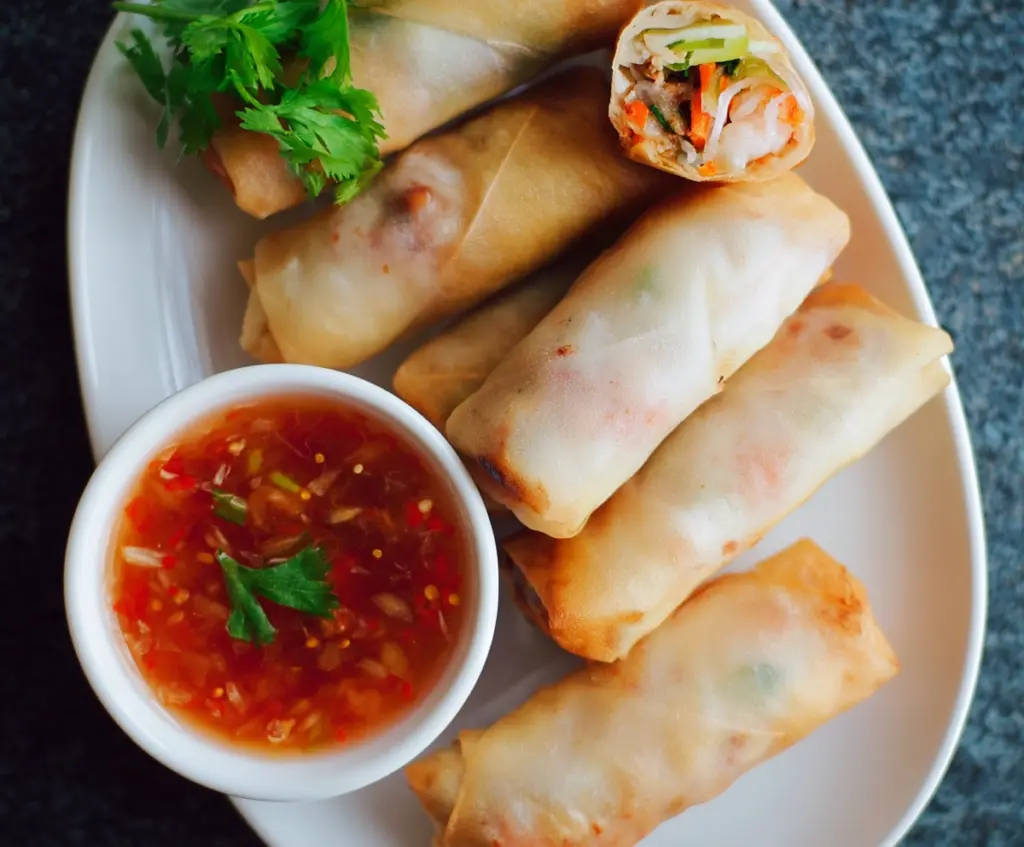
Thai spring rolls are fresh, light, and packed with crunch and flavor! These rolls usually have crisp veggies like carrots and cucumbers, fresh herbs like mint and cilantro, and sometimes shrimp or tofu, all wrapped up in delicate rice paper. The best part is the mix of textures and the dipping sauce that brings everything together.
I love making Thai spring rolls when I want something refreshing and fun to eat. Rolling them up feels like a little creative project, and it’s always exciting to play around with the fillings. I usually keep a big bowl of water nearby to soften the rice paper just right—it’s a small trick that helps keep them from tearing.
These rolls are perfect as a light lunch or appetizer. I like to serve them with a peanut dipping sauce or a tangy sweet chili sauce, and they always disappear fast when I have friends over. Plus, they make great finger food if you want something healthy and satisfying without much fuss.
Key Ingredients & Substitutions
Spring roll wrappers: These are usually thin rice paper or wheat-based wrappers. Rice paper is best for fresh rolls, while wheat wrappers are great for frying. If you can’t find them, look for lumpia wrappers or even thin tortilla wraps for a twist.
Protein: Ground pork and shrimp are traditional and add good texture. You can swap in ground chicken, turkey, or tofu for a vegetarian option. Cook them well before wrapping.
Vegetables & herbs: Cabbage, carrot, bean sprouts, and green onions bring crunch and freshness. If you like, add shredded mushrooms or bell peppers. Fresh cilantro or mint boost the flavor.
Seasonings: Fish sauce is key for that umami taste, but if you avoid seafood, use soy sauce or tamari. Don’t skip the white pepper—it adds subtle warmth.
Dipping sauce: This sweet and spicy sauce balances the rolls perfectly. You can adjust chili level or swap fish sauce for soy sauce for a vegetarian twist. Fresh garlic and chili bring zest.
How Do I Roll Spring Rolls Without Tearing the Wrappers?
Rolling the spring rolls can be tricky because the wrappers are delicate. Here’s how to do it smoothly:
- Soften each wrapper quickly in warm water—about 5-10 seconds. Don’t soak too long or they get sticky and tear.
- Lay the wrapper flat on a clean surface immediately after softening.
- Place the filling near the edge closest to you but leave space at the ends for folding.
- Fold the edge over the filling, then fold in both sides tightly to enclose the filling.
- Roll it up firmly all the way to the end, using a little water to seal the edge well.
- If a wrapper tears, just patch it with a tiny bit of water and a fresh wrapper piece or start again to avoid leaks when frying.
Taking your time and working with dry, gentle hands helps keep the wrappers intact and your rolls neat!
Equipment You’ll Need
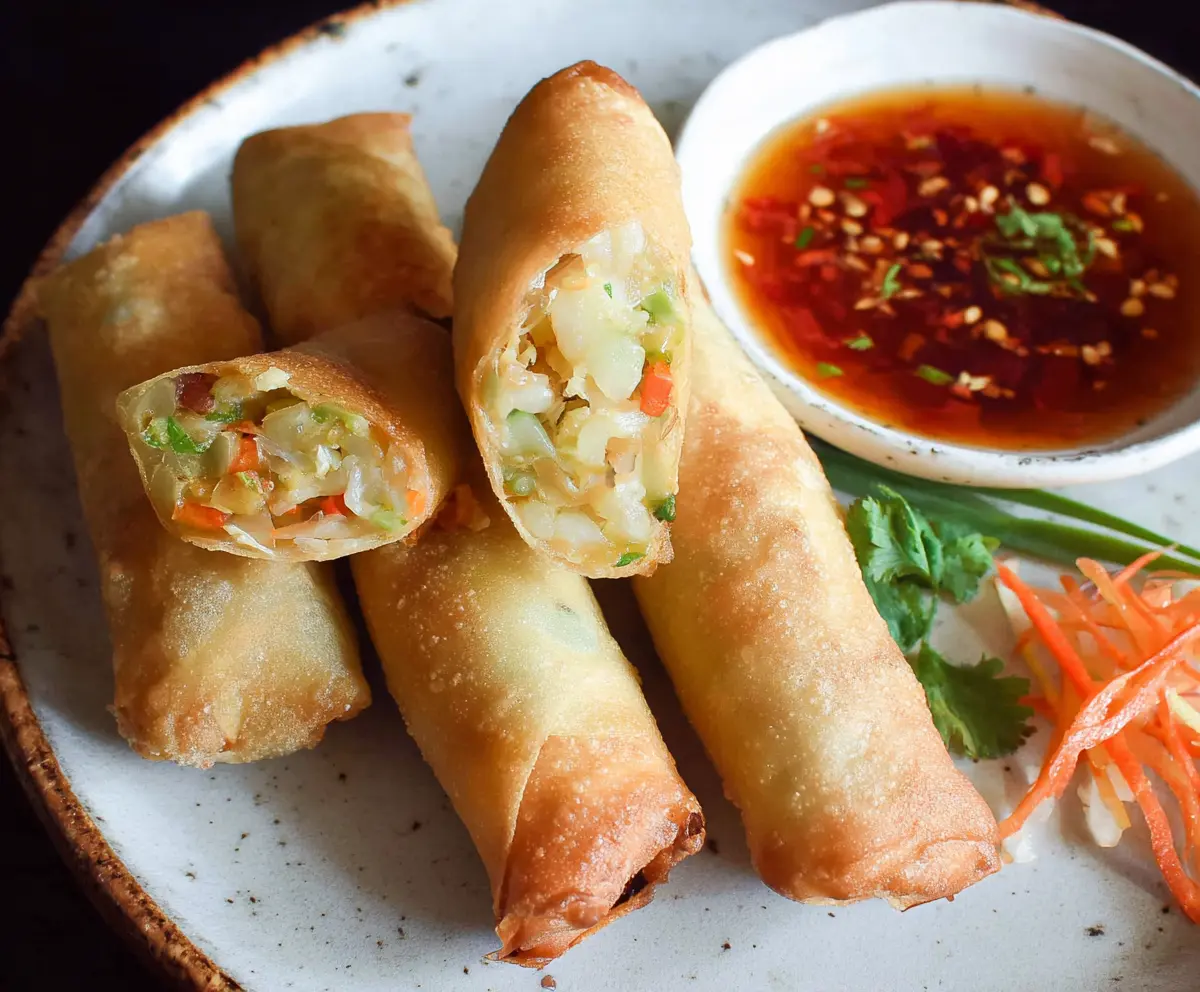
- Deep-fry thermometer – I find it helpful to check the oil temperature so the rolls turn golden and crispy.
- Large frying pan or deep pot – plenty of space for the oil and for frying the rolls evenly.
- Slotted spoon or tongs – to carefully remove the fried spring rolls and drain excess oil.
- Mixing bowls – for preparing the filling ingredients and dipping sauce.
- Plate lined with paper towels – to absorb excess oil after frying.
- Small saucepan – for making the dipping sauce.
Flavor Variations & Add-Ins
- Vegetarian filling: Swap the meat and shrimp for more vegetables like mushrooms, bell peppers, or zucchini for a veggie-packed roll.
- Herb boost: Add fresh Thai basil or mint to the filling for extra aromatic flavor.
- Spicy kick: Mix chopped Thai bird’s eye chilies or a dash of Sriracha into the filling or dipping sauce for more heat.
- Cheese twist: Incorporate a sprinkle of shredded mozzarella or cream cheese inside the rolls for a creamy surprise.
Equipment You’ll Need
- Large frying pan or deep pot – for frying the spring rolls.
- Deep-fry thermometer – to check oil temperature and keep it around 350°F (175°C).
- Slotted spoon or tongs – for taking the rolls out of the hot oil safely.
- Mixing bowls – to prepare the filling and dipping sauce.
- Plate lined with paper towels – to drain excess oil from fried spring rolls.
- Small saucepan – to make the dipping sauce.
- Cutting board and knife – to chop the vegetables and herbs.
Variations
- Vegetarian: Skip the meat and shrimp, and add mushrooms, tofu, or extra veggies like bell peppers and zucchini.
- Herbs: Add fresh Thai basil, mint, or cilantro inside for extra flavor.
- Spicy: Add chopped chilies to the filling or make the dipping sauce hotter by adding more chili or a splash of Sriracha.
- Fresh spring rolls: Use rice paper wrappers instead, and don’t fry — just roll with fresh herbs and veggies, then serve with a peanut sauce.
- Different proteins: Try ground turkey, chicken, or shredded cooked chicken instead of pork and shrimp.
Can I Make Thai Spring Rolls Ahead of Time?
Yes! You can prepare and roll them in advance, then refrigerate them covered for up to 4 hours before frying. Fry just before serving to keep them crispy.
What Can I Use Instead of Fish Sauce?
If you prefer a vegetarian or milder flavor, substitute fish sauce with soy sauce or tamari. It won’t be exactly the same but still delicious!
How Do I Store Leftover Spring Rolls?
Store leftover fried spring rolls in an airtight container in the fridge for up to 2 days. Reheat in a hot oven or air fryer to keep them crispy—they may get soggy in the microwave.
Can I Freeze Fried Spring Rolls?
Absolutely! Freeze unfried wrapped rolls on a baking sheet, then transfer to a freezer bag. When ready, fry them directly from frozen, just add a minute or two to the cooking time.