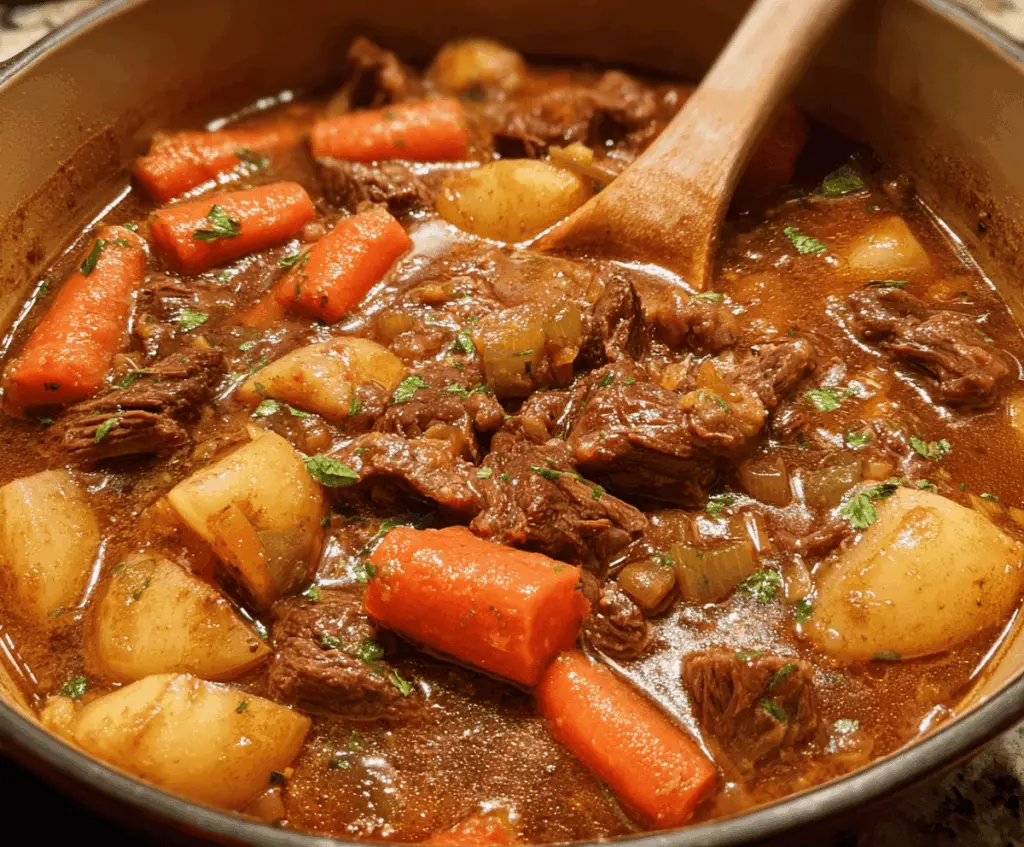
Old Fashioned Beef Stew is classic comfort food at its best—tender chunks of beef slowly cooked until they’re melt-in-your-mouth soft, surrounded by hearty potatoes, carrots, and onions in a rich, flavorful broth. It’s the kind of meal that fills your home with warmth and makes you feel cozy from the inside out.
I love making this stew on a chilly day when there’s nothing better than sitting down to a warm, satisfying dinner. It’s one of those recipes I return to again and again because it’s so simple, but the slow cooking really brings out such a deep, homey flavor. Plus, the beef gets so tender you barely need a knife!
My favorite way to serve this stew is with some crusty bread on the side to soak up every last bit of the delicious broth. It’s like a hug in a bowl, perfect for sharing with family or friends. Whenever I make it, it seems to bring everyone together, and there’s something special about the way a classic recipe can make any day feel a little brighter.
Key Ingredients & Substitutions
Beef chuck: This cut is perfect for stew because it becomes tender and flavorful when cooked slowly. If you can’t find chuck, beef brisket or short ribs work well too.
Carrots and potatoes: Classic veggies that hold up nicely in the stew. You can swap potatoes for sweet potatoes or parsnips for a twist.
Tomato paste: Adds depth and richness to the broth. If you don’t have tomato paste, a spoonful of ketchup can work in a pinch.
Red wine: This adds complexity to the stew, but if you prefer not to use alcohol, just add extra beef broth instead.
How Do You Brown the Beef Perfectly for Stew?
Browning beef is key to deep flavor. Here’s how to do it right:
- Pat meat dry to prevent steaming.
- Heat oil in your pot over medium-high heat until shimmering.
- Brown the beef in batches—don’t crowd the pan so the meat sears properly.
- Cook until all sides are deeply browned, about 5-7 minutes per batch.
- Remove browned pieces and set aside before cooking veggies.
This step locks in juices and adds a rich, caramelized flavor that makes the stew taste homemade and hearty.
Equipment You’ll Need
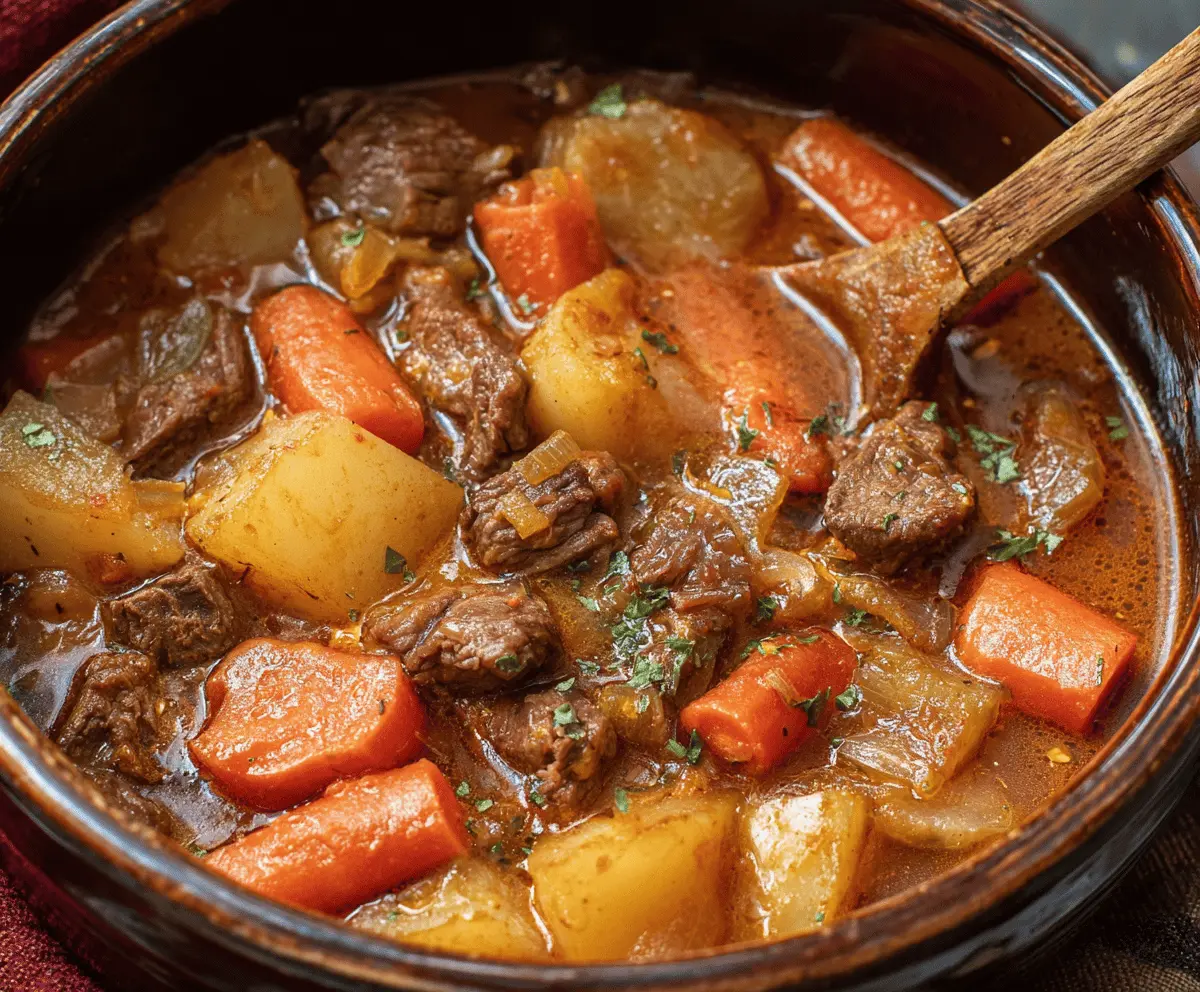
- Large heavy pot or Dutch oven – I like this because it evenly heats and can go from stove to oven easily.
- Wooden spoon – great for scraping up bits from the bottom and stirring the stew gently.
- Sharp knife and cutting board – makes chopping beef, vegetables, and herbs quick and safe.
- Measuring spoons and cups – helps keep the ingredients just right for perfect flavor.
- Stove or slow cooker – you can make this on your stovetop or set it and forget it in a slow cooker.
Flavor Variations & Add-Ins
- Swap beef for lamb or chicken for a different take on the stew; each brings a unique flavor.
- Add mushrooms or peas in the last 30 minutes for extra texture and freshness.
- For a spicy kick, stir in some red pepper flakes or a dash of hot sauce.
- Use different herbs like bay leaves, thyme, or even rosemary to customize the flavor to your taste.
Old Fashioned Beef Stew
Ingredients You’ll Need:
- 2 lbs beef chuck, cut into 1 ½-inch cubes
- 3 tablespoons vegetable oil
- 1 large onion, chopped
- 3 cloves garlic, minced
- 4 cups beef broth
- 1 cup red wine (optional, can substitute with more beef broth)
- 4 large carrots, peeled and cut into chunks
- 4 medium potatoes, peeled and cut into chunks
- 2 stalks celery, chopped
- 2 tablespoons tomato paste
- 1 teaspoon dried thyme
- 1 teaspoon dried rosemary
- 2 bay leaves
- Salt and black pepper, to taste
- 2 tablespoons all-purpose flour (optional, for thickening)
- 2 tablespoons fresh parsley, chopped (for garnish)
How Much Time Will You Need?
This recipe takes about 30 minutes to prepare and brown the beef and veggies, plus 2 to 2 ½ hours of gentle simmering to make the beef tender and develop rich flavors. It’s great to make ahead and reheat, since the stew tastes even better the next day!
Step-by-Step Instructions:
1. Brown the Beef:
Pat your beef cubes dry with paper towels and sprinkle with salt and pepper. Heat the vegetable oil in a large heavy pot or Dutch oven over medium-high heat. In batches, brown the beef on all sides, which usually takes about 5-7 minutes per batch. Don’t crowd the pot—this helps develop that beautiful crust. Once browned, set the beef aside.
2. Cook the Veggies and Build Flavor:
Using the same pot, add the chopped onions and celery. Sauté for about 5 minutes until they soften. Add the minced garlic and cook for another minute, until fragrant. Stir in the tomato paste and cook for 1-2 minutes, coating the veggies well.
3. Thicken and Add Liquids:
Optional but recommended: sprinkle the flour over the vegetables and stir for about a minute to cook off the raw taste. Then pour in the beef broth and red wine (if using). Scrape the bottom of the pot to loosen all those browned bits for extra flavor.
4. Simmer the Stew:
Return the browned beef to the pot. Add thyme, rosemary, and bay leaves. Bring everything to a gentle boil, then reduce heat to low and cover. Let it simmer gently for 1½ to 2 hours, or until the beef is deliciously tender.
5. Add Roots and Finish Cooking:
Add the carrots and potatoes to the pot. Continue simmering, covered, for another 30-40 minutes, until the vegetables are soft but not mushy.
6. Final Seasoning and Serving:
Remove bay leaves, taste, and adjust salt and pepper as needed. Sprinkle with fresh parsley just before serving for a bright, fresh touch. This stew is wonderful served hot with some crusty bread to soak up the hearty gravy.
Can I Use Frozen Beef for This Stew?
Yes, but make sure to fully thaw the beef in the refrigerator overnight before cooking. Pat it dry to remove excess moisture, which helps the beef brown better for richer flavor.
Can I Make This Stew in a Slow Cooker?
Absolutely! Brown the beef and sauté the veggies on the stove first, then transfer everything to your slow cooker. Cook on low for 6-8 hours or high for 3-4 hours until beef is tender.
How Should I Store Leftovers?
Let the stew cool to room temperature, then store in an airtight container in the fridge for up to 3 days. Reheat gently on the stove or in the microwave, stirring occasionally for even heating.
Can I Add Other Vegetables?
Yes! Mushrooms, peas, or parsnips make great additions. Add softer veggies like peas in the last 10 minutes to avoid overcooking.