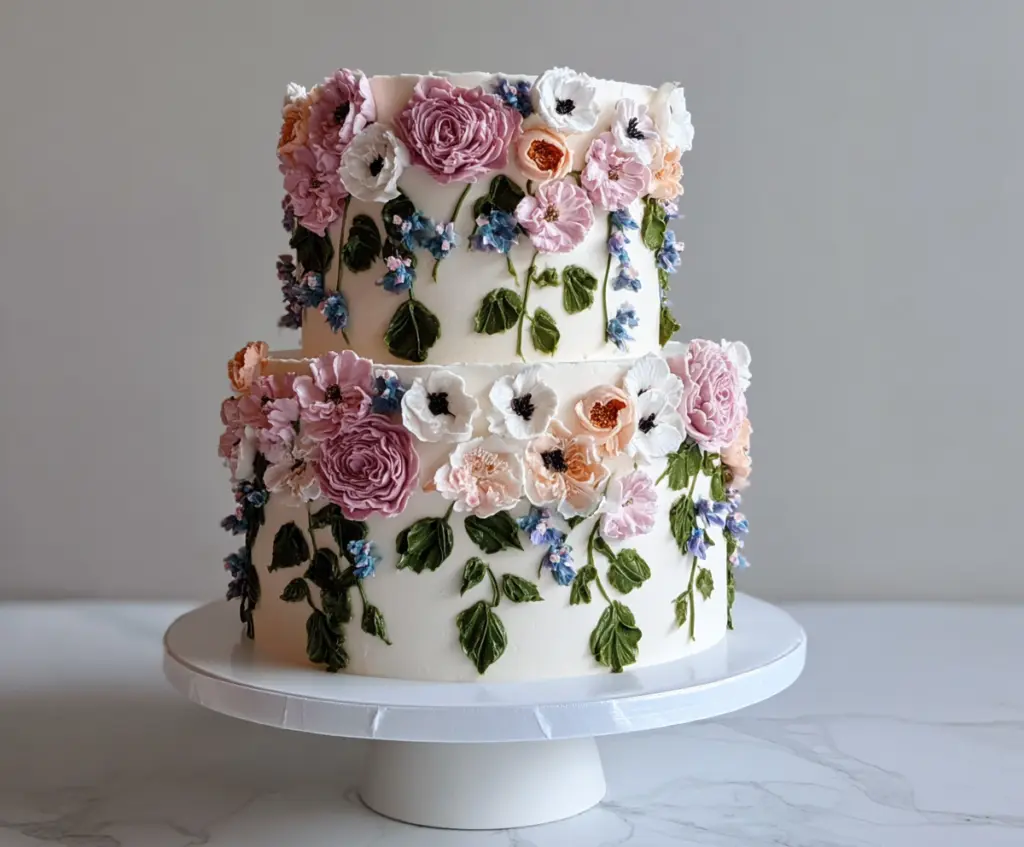
Floral cake is a delightful treat that looks as beautiful as it tastes. With soft, moist layers and pretty edible flowers or delicate floral decorations on top, this cake brings a fresh, garden-like feel to any celebration. It’s the kind of cake that makes you smile just by looking at it.
I love making floral cake because it feels like bringing a bit of nature indoors. Adding flowers like rose petals, violets, or lavender not only makes the cake look special but also adds subtle, lovely flavors that aren’t too sweet. If you’re like me, decorating it becomes a fun, creative part of the baking process—no two cakes need to be the same.
One of my favorite ways to enjoy floral cake is with a cup of tea on a sunny afternoon. It’s perfect for birthdays, garden parties, or just to make an ordinary day feel extra special. I find that sharing this cake with friends always sparks happy conversations and lots of smiles, making those moments even sweeter.
Key Ingredients & Substitutions
Flour: All-purpose flour works well here for structure. For gluten-free needs, try a 1-to-1 gluten-free baking blend to keep the texture soft.
Butter: Unsalted butter is best to control salt. Make sure it’s softened to room temperature for smooth mixing. You can swap with margarine, but the flavor won’t be as rich.
Buttermilk: Adds tanginess and moisture. If you don’t have buttermilk, mix 1 cup milk with 1 tbsp lemon juice or vinegar and let sit 5 mins.
Powdered Sugar: Sifting prevents lumps in your buttercream, making it silky and smooth. This is key for easy piping.
Gel Food Coloring: Ideal for vibrant colors without thinning the frosting. Liquid colors may make your buttercream too soft.
How Can I Get Light, Fluffy Cake Batter & Buttercream?
Getting the right texture in your cake and frosting is all about mixing and temperature control. Here’s how:
- Cream Butter and Sugar: Beat them together for 4-5 minutes until pale and fluffy. This traps air for a tender cake.
- Add Eggs Slowly: Adding them one at a time makes sure they blend fully without curdling the batter.
- Mix Dry and Wet Alternately: Add your dry flour mix and buttermilk in parts, starting and ending with dry. Mix just until combined to avoid tough cake.
- Soften Butter for Frosting: Use room temp butter so it whips smoothly. Cold butter won’t blend well, and melted butter makes your frosting runny.
- Beat Buttercream on High: After adding sugar and cream, beat for several minutes. This builds volume, giving a light, airy frosting perfect for piping.
Equipment You’ll Need
- 2 8-inch round cake pans – I recommend these because they give even layers that are easy to level.
- Mixing bowls – for whisking dry ingredients and beating batter, they keep things organized.
- Hand or stand mixer – makes creaming butter and sugar and whipping the frosting much quicker and easier.
- Spatula and butter knife – for smoothing batter in pans and spreading crumb coats smoothly.
- Piping bags and tips (petal, leaf, round) – essential for creating the beautiful flowers and leaves on the cake.
- Cooling racks – help your cakes cool evenly so they don’t get soggy or cracked.
Flavor Variations & Add-Ins
- Switch vanilla extract with almond or lemon extract for a different, fresh flavor in both cake and frosting.
- Add chopped nuts or dried fruit into the batter for texture and extra flavor.
- Incorporate a splash of liqueur, like Grand Marnier or Chambord, into the frosting for a sophisticated twist.
- Use different flower colors or metallic food paints to match any theme or special occasion.
Floral Buttercream Cake
Ingredients You’ll Need:
For the Cake:
- 3 cups all-purpose flour
- 2 ½ tsp baking powder
- ½ tsp baking soda
- ¼ tsp salt
- 1 cup unsalted butter, softened
- 2 cups granulated sugar
- 4 large eggs
- 1 tbsp vanilla extract
- 1 cup buttermilk
For the Buttercream Frosting:
- 2 cups unsalted butter, softened
- 8 cups powdered sugar, sifted
- ½ cup heavy cream
- 2 tsp vanilla extract
- Pinch of salt
- Gel food coloring (various colors: purples, pinks, whites, blues, greens)
For Decorating:
- Piping bags
- Assorted piping tips (petal tip, leaf tip, round tips)
How Much Time Will You Need?
This recipe takes about 20 minutes to prepare the batter and frosting, 30-35 minutes to bake, and about 40 minutes total for cooling and chilling between steps. Including decorating and final chilling, plan for around 2 to 2.5 hours to complete your beautiful floral cake.
Step-by-Step Instructions:
1. Prepare the Cake Batter:
Start by preheating your oven to 350°F (175°C). Grease and flour two 8-inch round cake pans so your cakes don’t stick. In a medium bowl, whisk together the flour, baking powder, baking soda, and salt until well combined.
In a large mixing bowl, cream the softened butter and sugar using a hand mixer or stand mixer. Beat them on medium speed for about 4-5 minutes until the mixture looks light and fluffy. Then, add the eggs one at a time, mixing well after each addition. Stir in the vanilla extract.
Add the dry ingredients and buttermilk alternately into the butter mixture — start and finish with the dry ingredients. Mix gently until everything is just combined. Avoid overmixing to keep the cake tender.
2. Bake the Cakes:
Divide the batter evenly into your prepared cake pans. Smooth the tops gently with a spatula. Put the pans in your preheated oven, and bake for 30 to 35 minutes. Check doneness by inserting a toothpick into the center – it should come out clean when done.
Once baked, let the cakes cool in the pans for about 10 minutes. Then, carefully turn them out onto wire racks to cool completely. Cooling fully ensures your frosting won’t melt when applied.
3. Prepare the Buttercream Frosting:
In a large bowl, beat the softened butter until creamy and smooth. Gradually add the sifted powdered sugar, about one cup at a time, mixing well after each addition. Stir in the vanilla, heavy cream, and a pinch of salt.
Beat the frosting on high speed for 3 to 5 minutes until it becomes light and fluffy, perfect for piping. Divide the buttercream into separate small bowls depending on how many flower colors you want. Use gel food coloring to tint each bowl to your desired shades.
4. Assemble the Cake:
If your cake layers have domed, gently level them with a serrated knife so the layers stack evenly. Place one cake layer on a cake board or serving plate, then spread an even layer of buttercream on top.
Stack the second layer on top and cover the entire cake with a thin crumb coat of frosting to seal in crumbs. Chill the cake in the fridge for about 30 minutes to set the crumb coat.
5. Decorate the Cake with Floral Designs:
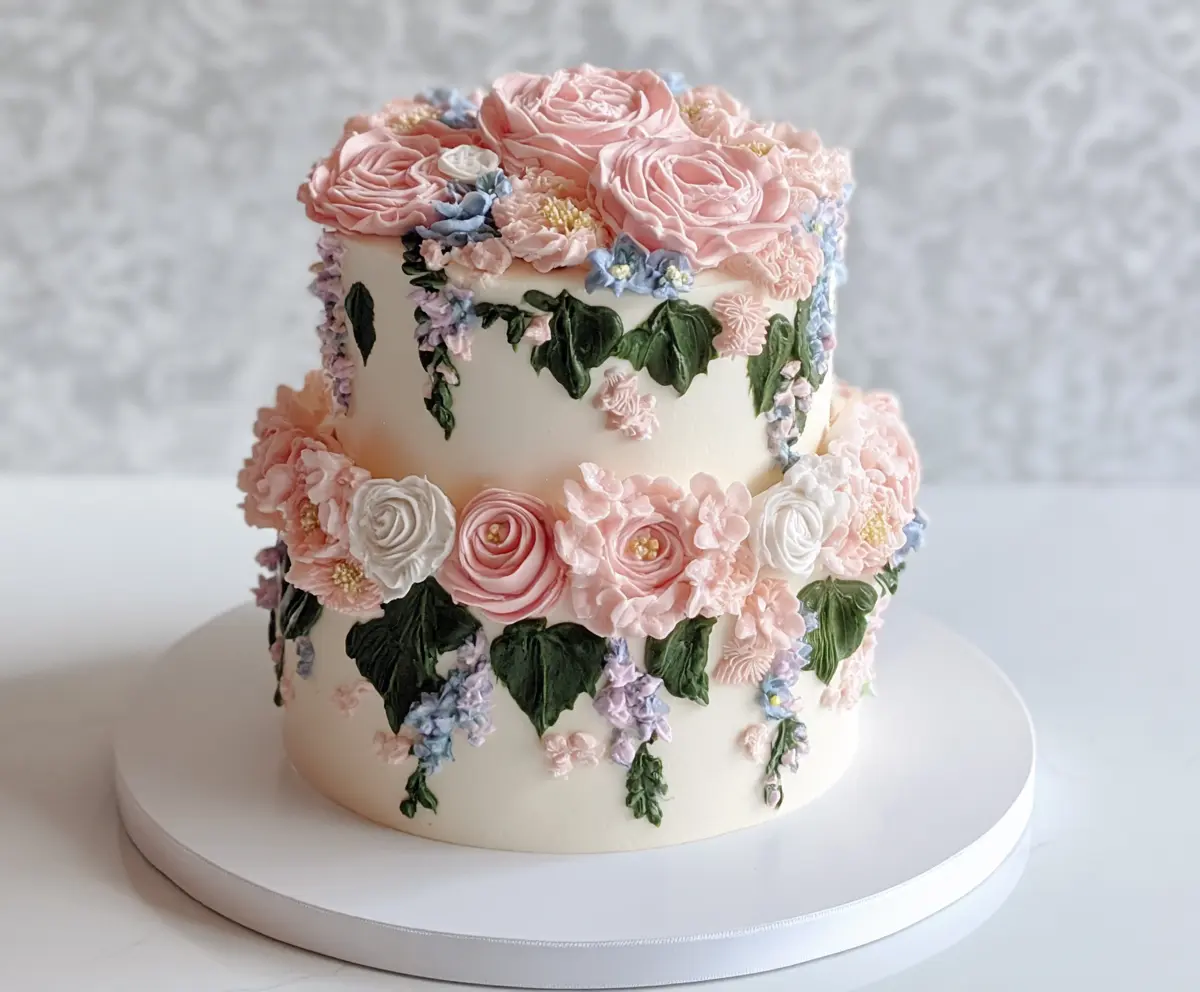
Fit your piping bags with petal tips and start piping clusters of flowers all around the cake using your colored buttercream. Use shades of purples, pinks, peaches, and whites for pretty blossoms.
With a leaf tip, pipe green leaves and stems to create a flowing natural floral look. Add small blue flowers and details to add color depth and interest.
Keep layering flowers and leaves until the entire cake is covered with lush, 3D buttercream flowers, creating a stunning floral effect.
6. Final Touches:
Once you’re happy with the decorations, chill the cake again to set everything firmly. When ready to serve, bring the cake to room temperature for the best taste and texture. Enjoy your beautiful, delicious floral buttercream cake!
Can I Use Frozen Cake Layers?
Yes! Just make sure to thaw them completely in the fridge overnight and bring to room temperature before frosting to avoid condensation and sogginess.
How Can I Make the Buttercream Less Sweet?
Try reducing the powdered sugar slightly or adding a bit more heavy cream to lighten the sweetness without sacrificing texture.
What’s the Best Way to Store the Finished Cake?
Store the cake in an airtight container or cake dome at room temperature for up to 2 days. If your kitchen is warm, keep it in the fridge and bring to room temp before serving.
Can I Substitute Milk for Buttermilk?
Yes! To mimic buttermilk, add 1 tablespoon of lemon juice or white vinegar to 1 cup of milk and let it sit for 5 minutes before using.